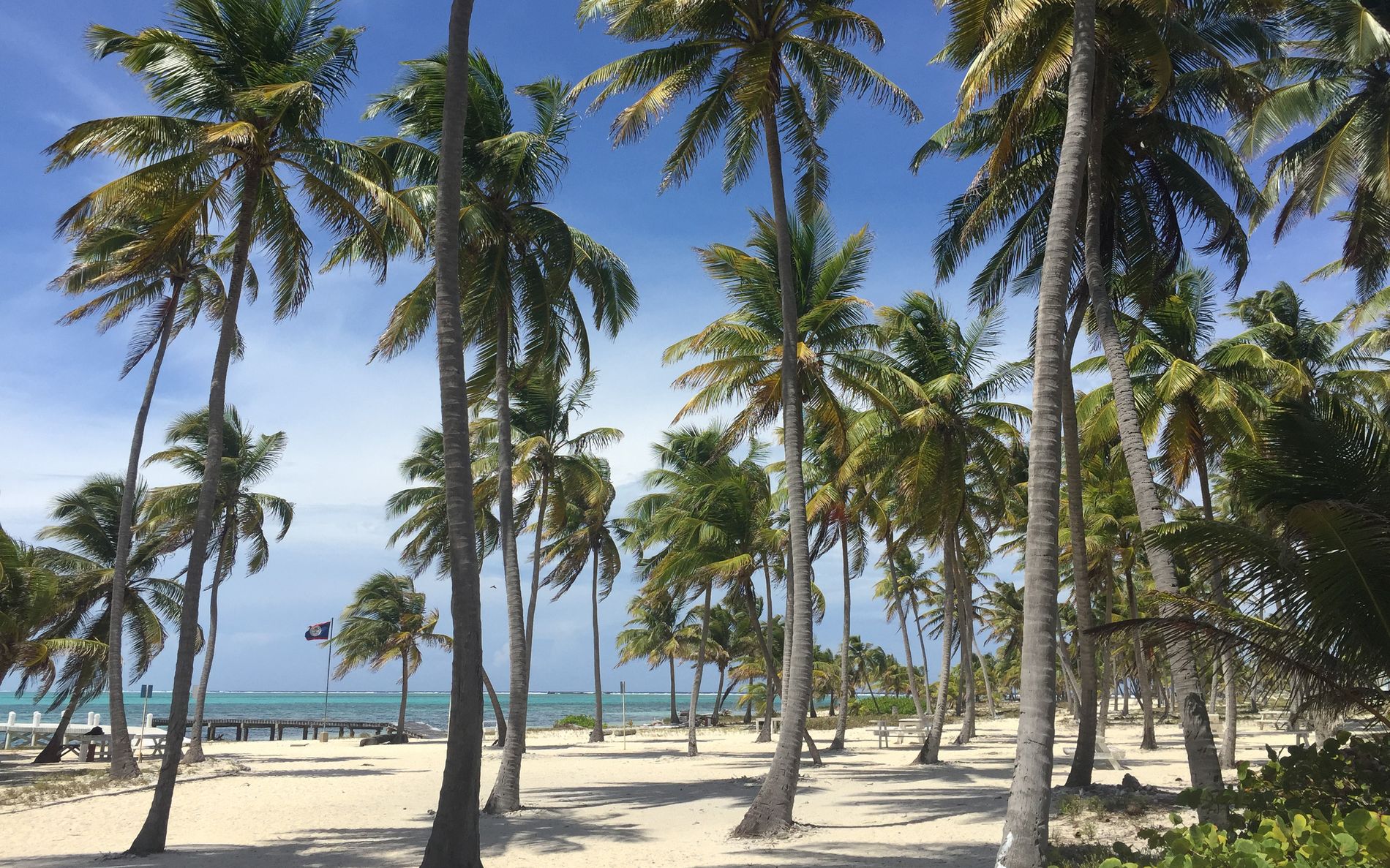
Half Moon Caye is a small island at the southeast corner of Lighthouse Reef and Belize's oldest protected area. It's home to a colony of about 4,000 red-footed boobies, and turtles nest on its beach. Most people see it as the lunch stop on a Great Blue Hole day trip from Caye Caulker.
The red-footed booby colony
The boobies are the reason Half Moon Caye is protected. About 4,000 red-footed boobies breed in the ziricote forest on the western half of the island, almost all of them the white-phase form. Magnificent frigatebirds nest in the same trees, and in breeding season the males puff up their red throat pouches.1
A trail leads from the beach to a viewing platform built above the treetops, so you look straight into the nests. The birds arrive around mid-December and leave by about August. Chicks hatch around March, so February to May is the best time to see adults and young together.
Keep to the trail and the platform. The forest is the nesting area, and the birds are easily disturbed.
Turtles, geckos and other wildlife
The southeast beach is a nesting site for loggerhead, hawksbill and green turtles from May to November, so give any nests you see plenty of space.4
The island is also the only known home of the island leaf-toed gecko, a small lizard found nowhere else in the world. You're more likely to spot iguanas in the branches and hermit crabs on the sand. Belize Audubon Society has recorded nearly 100 bird species on the caye, including ospreys and white-crowned pigeons.3
Beach, snorkeling and the wall
The island takes its name from the curved beach on its sheltered side. On most day trips there's time for a swim and a snorkel in the shallows off the beach, which is usually the best snorkeling of the day for non-divers.
Just offshore, the reef drops away into Half Moon Caye Wall, one of Belize's best-known wall dives, with sponges, eagle rays, turtles and reef sharks. It's normally the second dive on a Great Blue Hole dive day: see what a Blue Hole dive day involves. The rusting wreck to the north is the Elksund, a landmark you'll see from the boat.
How to visit Half Moon Caye from Caye Caulker
There's no ferry or flight to Half Moon Caye. You get there by boat, and from Caye Caulker that almost always means a Great Blue Hole day trip. The ride out takes 2-2.5 hours. The boat stops at the Blue Hole first, then Half Moon Caye for lunch, the bird trail and a snorkel or second dive, then Long Caye Aquarium, a reef site off Long Caye, on the way back.
Scenic flights over the Blue Hole don't land, so they won't get you to Half Moon Caye. To spend longer than a lunch stop, you'll need to camp or join a liveaboard that anchors off the island. See where to stay on Lighthouse Reef.
Half Moon Caye park fee
The park fee is BZ$20 (US$10) per person for non-residents. You register and pay at the visitor center on arrival. On a tour, the guide collects it and pays for the group, and Caye Caulker operators include it in the trip price. Check it's included when you book.5
Camping on Half Moon Caye
Half Moon Caye is the only place on the atoll where you can camp, and there are two ways to do it:
Belize Audubon Society campsite: a basic site you book through Belize Audubon Society. Tents and meals aren't provided, so you bring everything, including drinking water, and arrange your own boat out.
Organized basecamp trips: Island Expeditions runs multi-day trips to a tented basecamp on the island, with meals, kayaking and snorkeling included.
Either way, camping gets you the island after the day boats leave, and sunrise from the easternmost point of Belize.
History
Half Moon Caye was first protected as a bird sanctuary in the 1920s, which makes it the oldest protected site in Belize. It became a natural monument in 1982 and is managed by Belize Audubon Society. In 1996 it became part of the Belize Barrier Reef Reserve System, a UNESCO World Heritage Site. The lighthouse that once stood here is gone.1, 2
Questions about Half Moon Caye
Where is Half Moon Caye?
Half Moon Caye is at the southeast corner of Lighthouse Reef, Belize's farthest atoll from the coast, about 50 miles east of Belize City. The Great Blue Hole is on the same atoll.
Can you visit Half Moon Caye from Caye Caulker?
You can visit Half Moon Caye from Caye Caulker on a Great Blue Hole day trip, which stops there for lunch.
When can you see the boobies on Half Moon Caye?
You can see the red-footed boobies on Half Moon Caye from about mid-December to August. February to May is best, when adults and chicks are both in the nests.
How much is the Half Moon Caye park fee?
The Half Moon Caye park fee is BZ$20 (US$10) per person for non-residents. Caye Caulker tour operators include it in the trip price.
Can you stay overnight on Half Moon Caye?
You can stay overnight on Half Moon Caye only by camping, either at the Belize Audubon Society campsite or on an organized basecamp trip. There are no hotels or lodges on the island.
Is Half Moon Caye worth visiting?
Half Moon Caye is worth visiting if you like wildlife: the booby platform and the beach are often the highlight of a Blue Hole day. It comes with the trip as the lunch stop, so it comes down to whether the Blue Hole day is worth it for you.
Prices, timetables and park fees on this site are compiled from operator websites and official sources, then checked and dated. Rankings are never sponsored, and affiliate links never change what gets recommended.
We'd like to use Google Analytics cookies to see which pages are useful. No ads, and no tracking across other sites. Privacy policy