Inside the Great Blue Hole
What lies 410 ft down, from the rim reef to the oxygen-free floor.
- Floor
- 410 ft
- Oxygen-free
- Below about 300 ft
- Divers reach
- 130 ft
- First subs
- December 2018

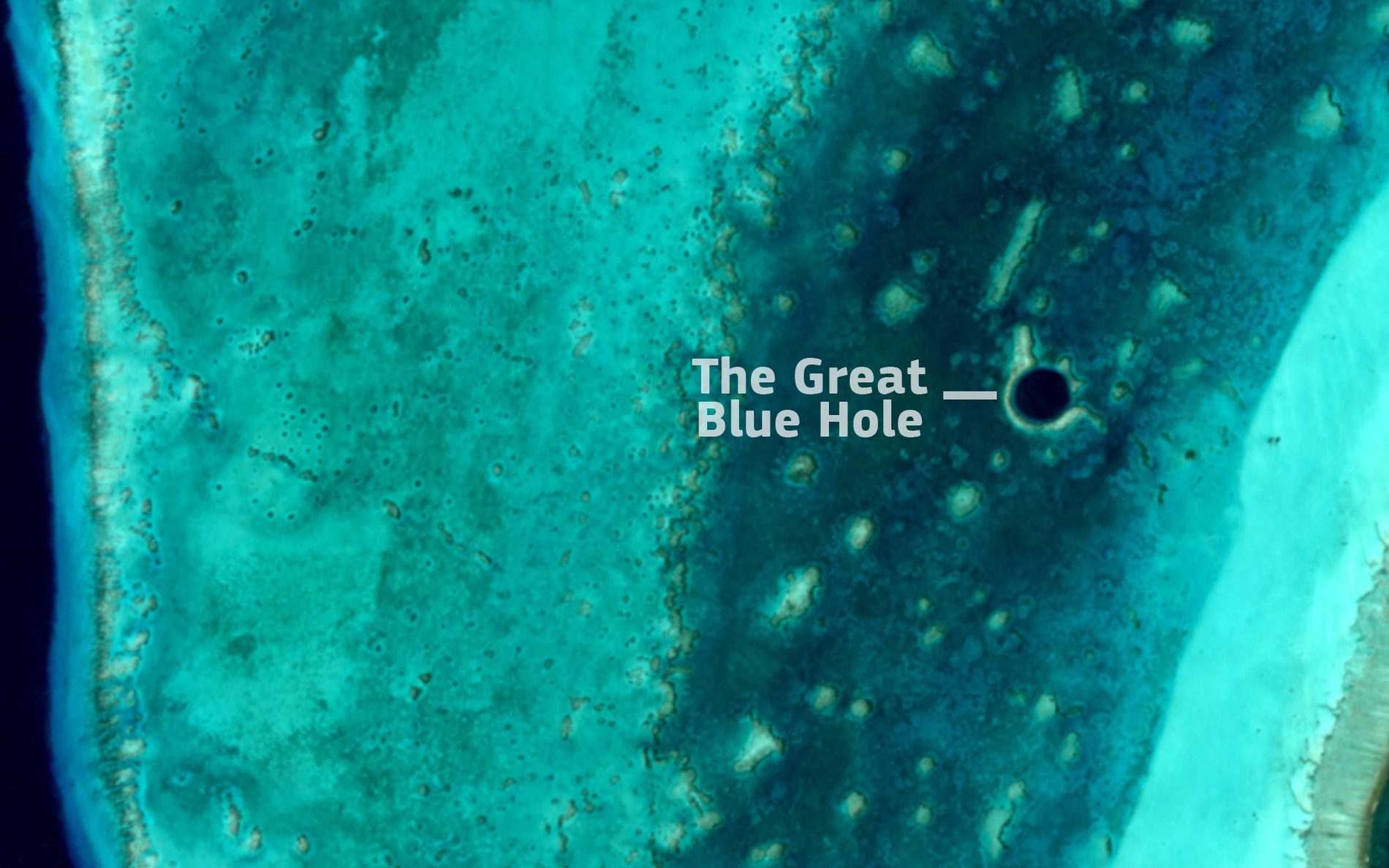
What lies 410 ft down, from the rim reef to the oxygen-free floor.
The bottom of the Great Blue Hole is a floor of fine sediment about 410 ft (125 m) down, under a layer of hydrogen sulfide where the water holds no oxygen. Almost nothing lives there. When two submarines reached it in December 2018, they found the shells of conchs that had wandered too deep, some litter and the remains of two divers.
Most visitors never get close. Divers on the day trip from Caye Caulker stop at 130 ft, among stalactites that grew when the hole was a dry cave. Below that, what we know comes from submarines, sonar and a sediment core drilled out of the floor.
| Depth | What's there | Who gets there |
|---|---|---|
| Surface to 30 ft | Rim reef: coral, reef fish, the odd shark or ray | Snorkelers and divers |
| 30 to 100 ft | Sheer limestone wall with feather duster worms, very little reef life | Divers |
| 100 to 130 ft | Stalactites hanging under an overhang where the wall cuts back | Divers on the standard dive |
| About 300 ft | Hydrogen sulfide layer, a hazy band with no oxygen below it | Submarines only |
| About 350 ft | Conch and hermit crab shells, and tracks in the sediment | Submarines only |
| About 410 ft | The floor: fine sediment holding a 5,700-year storm record | Submarines and a drill core |
Depths are approximate and vary across the hole. Depth and width come from a 2013 seismic survey.1
Two submarines made more than 20 dives into the Great Blue Hole between late November and mid December 2018, and used sonar to build the first 3D map of its inside. Part of it went out live on TV on December 2.2
The top of the hole looked the way divers know it: clear blue water and a steep wall. At about 300 ft the water turned hazy as the subs passed into the hydrogen sulfide layer, and the light faded out. Below it there were no fish and no coral. The floor was covered in the shells of conchs and hermit crabs that had crawled down into the dead water and died.
The pilots also filmed tracks in the sediment at about 350 ft. They looked strange on camera, but the likeliest explanation is animals that strayed into the oxygen-free zone and struggled before they died. There was litter too, including a plastic soda bottle and a lost GoPro.
The crews found the remains of two divers who had been lost in the hole. They left them where they lay and reported them to the Belize government.3
The Great Blue Hole is a deep, steep-sided pit, and the water near its floor barely mixes with the sea above. Anything organic that sinks (dead plankton, algae, fish) rots on the way down, and the bacteria doing the rotting use up the oxygen. Once it's gone, other bacteria take over and give off hydrogen sulfide, the gas that smells of rotten eggs.
That's the layer the submarines passed through at about 300 ft. It's also why the floor keeps such a clean record: with nothing alive to burrow through the mud, the layers settle and stay in order.
Stalactites only grow where water drips through air. So the ones hanging at 100 to 130 ft tell you the Great Blue Hole was once a dry cave, at a time when sea level sat far lower than it does now.
A giant stalactite that Jacques Cousteau's team brought up in 1970 pinned down the timing. Its core grew from fresh water between roughly 20,000 to 12,000 years ago. Over that sits a marine crust, which built up after the rising sea flooded the cave within about the last 11,000 years.4 Our Great Blue Hole guide covers how the cave became the round hole you see from the air.
The standard dive drops over the rim at about 30 ft, follows the wall down to around 130 ft (40 m) and spends a few minutes among the stalactites before heading back up. It's deep and short, about 8 minutes at the bottom. Don't expect much life inside the hole. Reef sharks sometimes cruise the rim, but you're there for the stalactites, and the color on the trip comes on the next two reef dives.
At 130 ft, nitrogen narcosis is a real possibility, so most operators want Advanced Open Water or logged deep dives first. Diving the Great Blue Hole has the requirements, prices and the full dive plan.
In 2025, researchers published the results from a 100 ft (30 m) sediment core drilled from the floor of the Great Blue Hole. Big storms wash coarser sediment off the surrounding reef and into the hole, so each tropical storm or hurricane leaves its own band. The core holds 5,700 years of them.
The record shows storms in the southwestern Caribbean becoming steadily more frequent over that time.5
No. The Great Blue Hole is the most famous blue hole, and at about 410 ft it's nowhere near the deepest. The current record holder is in Chetumal Bay in Mexico, the same bay the Chetumal to Caye Caulker ferry sets out across.
| Blue hole | Where | Depth |
|---|---|---|
| Taam Ja' Blue Hole | Chetumal Bay, Mexico | At least 1,380 ft (420 m), bottom not yet reached |
| Dragon Hole | South China Sea | 987 ft (301 m) |
| Great Blue Hole | Lighthouse Reef, Belize | About 410 ft (125 m) |
A survey in December 2023 lowered an instrument into Taam Ja' and still didn't find the bottom.6
The Great Blue Hole is about 410 ft (125 m) deep and 1,050 ft (320 m) across, based on the main geological survey of the site. You'll see slightly different figures elsewhere because they come from different surveys.
Yes, people have been to the bottom of the Great Blue Hole, but only in submarines. Two subs made more than 20 dives in December 2018. Recreational divers stop at about 130 ft.
Yes. The 2018 submarine crews found the remains of two divers at the bottom of the Great Blue Hole, left them in place and reported them to the Belize government.
Almost nothing lives at the bottom of the Great Blue Hole, because the water below about 300 ft has no oxygen. Bacteria cope with it. Fish, coral and shellfish don't, which is why the floor is scattered with conch shells.
No, you can't dive to the bottom of the Great Blue Hole on a normal trip. Tours from Caye Caulker go to about 130 ft (40 m), the limit for recreational diving, and the floor is more than three times deeper.
You can see the Great Blue Hole without diving by snorkeling the rim on a day trip or taking a flight tour. Neither gets you inside, but the flight is the only way to see the whole circle at once.